
Five Killer Quora Answers To Counterfeit Money Suppliers
The Dark World of Counterfeit Money Suppliers
Counterfeit currency has actually long afflicted economies around the world, resulting in significant financial losses for individuals and organizations alike. The expansion of counterfeit money is not only a matter of economic concern but likewise a social and legal problem, raising questions about criminality, security, and principles. This post will explore the world of counterfeit money suppliers, exploring how they operate, the innovations they use, the effect of their actions, and what can be done to combat this unlawful trade.
Understanding Counterfeit Money
Counterfeit money is defined as replica currency produced with the intent to utilize it as if it were genuine. The inspirations behind counterfeiting include fraud, profit maximization, and financial destabilization. Suppliers of counterfeit currency vary extensively, from specific bad guys producing notes in your home to advanced criminal companies efficient in counterfeiting high-quality currency that carefully resembles authentic bills.
Table 1: Key Characteristics of Counterfeit Money
| Qualities | Real Money | Counterfeit Money |
|---|---|---|
| Quality of Print | High-quality, multi-layered printing | Varies; often lower quality, might be printed on plain paper |
| Security Features | Holograms, watermarks, and microprinting | Typically lack innovative security features |
| Perceived Value | Legally guaranteed by the government | No legal value; thought about fraud |
| Distribution | Distributed through banks and retail | Dispersed through unlawful channels, online marketplaces, or street vendors |
| Penalty for Use | None; legal tender | Lawbreaker charges, fines, and imprisonment |
The Anatomy of Counterfeit Money Suppliers
Counterfeit money suppliers can be classified into two primary classifications based on their operations:
-
Amateur Suppliers:
- Produce media-grade replicas using inexpensive printers.
- Typically sell these notes in small quantities.
- Usually target unsuspecting individuals rather than large companies.
- Use online platforms and marketplaces, such as the dark web, to reach clients.
-
Expert Suppliers:
- Operate more like businesses, utilizing innovative techniques to produce money identical from genuine currency.
- Invest in high-quality printing technology, paper, and security functions.
- Target banks, financial institutions, and big retail businesses with considerable quantities, often participating in arranged criminal activity structures.
Table 2: Ways Counterfeit Money Suppliers Operate
| Supplier Type | Description | Approaches Used |
|---|---|---|
| Amateur Suppliers | Individuals working separately | Home printing, online sales |
| Expert Suppliers | Organized groups with advanced resources | High-end printing technology, complicated distribution networks |
Legal Implications and Consequences
The production, circulation, and use of counterfeit money are felonies in many jurisdictions worldwide. In the United States, for example, charges can include substantial jail sentences, fines, and restitution. Numerous countries have enacted stringent laws to secure their currencies, making counterfeiting an attractive but extremely dangerous enterprise.
Table 3: Legal Consequences of Counterfeiting by Region
| Area | Penalties for Counterfeiting |
|---|---|
| United States | Approximately 20 years in prison and ₤ 500,000 fine |
| European Union | Differs by member state; normally up to 10 years in jail |
| Asia | Up to life imprisonment in severe cases; fines differ by country |
Effect on Society and Economy
The effects of counterfeit money extend beyond private losses; they affect economies on multiple levels:
- Inflation and Economic Instability: A rise in counterfeit currency can lead to inflated prices, destabilizing the economic infrastructure.
- Loss of Trust in Financial Systems: Widespread counterfeiting can decrease faith in currency worth and organizations, impacting costs and saving behaviors.
- Costs of Detection Measures: Governments and businesses sustain considerable costs implementing detection and avoidance procedures to fight counterfeiting.
Combating Counterfeit Currency
In spite of advances in technology making it simpler to counterfeiting, different measures can be required to fight this prohibited trade. It is important to develop robust anti-counterfeiting policies and inform the general public on recognizing counterfeit money.
Actions to Combat Counterfeiting:
-
Public Awareness Campaigns:
- Educate the public en routes to recognize counterfeit currency.
-
Buying Technology:
- Use advanced printing strategies for genuine currency and gear up companies with tools to detect counterfeits.
-
Cooperation with Law Enforcement:
- Increase cooperation in between financial organizations and law enforcement companies to track counterfeit operations.
-
Improved Security Features:
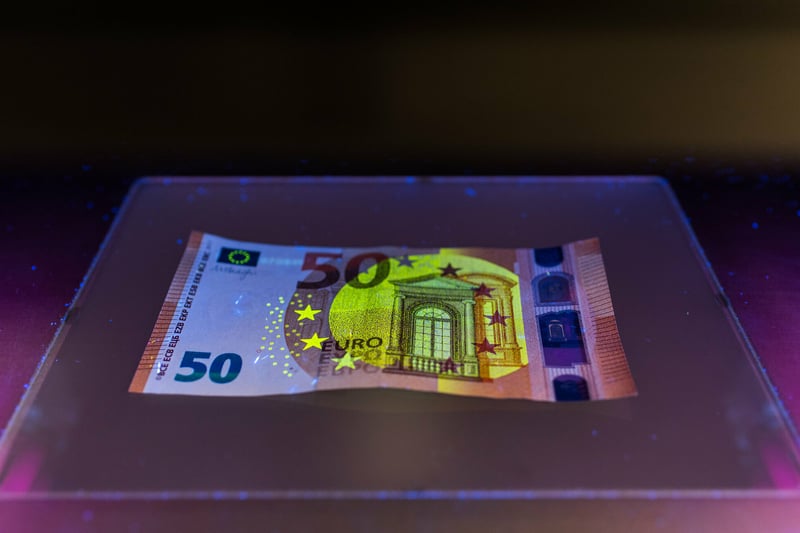
- Enhance currency security features to make counterfeiting more difficult.
Frequently Asked Questions about Counterfeit Money Suppliers
1. How can I determine counterfeit money?Look for typical security functions such as watermarks, security threads, color-shifting ink, and microprinting. Use tools such as blacklights or magnifying lenses for a more in-depth examination. 2. Are all counterfeit notes
simple to spot?No, some counterfeit bills are professionally made and can be very hard to spot. However, they typically still lack some of the necessary security functions present in real currency. 3. What ought to I do if I presume I have gotten counterfeit money?Report it to regional law enforcement
and do not attempt to invest or return it. It is essential to handle the situation appropriately to avoid legal repercussions. 4. Are there websites that sell counterfeit money?Yes, while illegal, many counterfeit suppliers utilize the dark web and other online platformsto market their items. It’s important that individuals
prevent these websites to evade criminal activity. Counterfeit money is a complex problem that affects everybody from individuals to federal governments. Comprehending the mechanisms and suppliers behind the counterfeit
currency trade is necessary in developing reliable strategies to combat it. Public awareness, advanced detection innovations, and legal consequences remain important in the fight against counterfeiting. By staying watchful and informed, society can much better safeguard itself from the hazards postured by counterfeit money suppliers, maintaining the integrity of legitimate financial systems.